

If you’re caring for an older loved one (or a client) who is relying heavily on you, you may have discovered something surprising: caregiving is not one job—it’s about twelve jobs, and the “schedule” changes without notice. You’re coordinating care, tracking details, making decisions, and offering steady reassurance, all while trying to keep your own life moving too.
And if as a caregiver you feel overwhelmed at times, you’re not alone. Many people become the “default” caregiver slowly—one ride to an appointment turns into a weekly routine, which turns into managing medications, meals, and everything in between. It can be deeply meaningful work, and it can also be exhausting, confusing, and emotionally heavy.
This guide breaks down the core caregiver roles and responsibilities, along with practical best practices to help you set clear expectations and get support. Use it like a friendly checklist—scan what applies, circle what’s new, and give yourself credit for the parts you’re already doing. (If you’ve ever thought, “I should get a badge for this,” consider this your official badge: you’re doing real work.) Caregiver duties may include many variations of the following core areas:
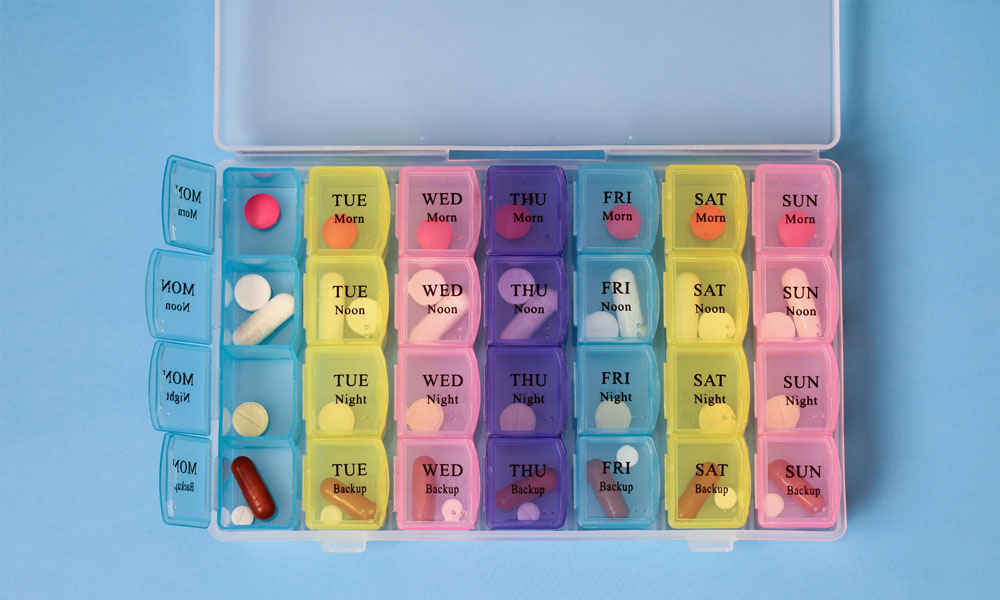
Medication Management
Ensuring medications are taken correctly and on schedule, particularly for individuals managing multiple prescriptions, can be one of the main duties when caring for a loved one or client. If you are caring for someone who has dementia or Alzheimer’s, medication management is a task that should be overseen by a support person. Without proper support individuals with memory issues could run into problems with incorrect timing or dosage, which could have fatal consequences. One easy way to manage medications is through the use of a 7 day pill container. Below are some things to consider when deciding on the right container for your loved one or client.
- Dosing Frequency : For those taking medications more than once a day, it’s important to select a pill organizer that features multiple rows per day. Options such as AM/PM or morning/noon/night compartments help ensure that medications can be separated and scheduled according to the correct time of day.
- Compartment Size : Make sure the compartments are large enough to hold big pills or several medications at once so that all necessary doses fit comfortably within the organizer.
- Ease of Use : Choose push-button or easy-lid designs to make opening and closing the organizer simpler, especially for those who have arthritis or limited hand strength.
- Portability : Some pill organizers are designed so that you can remove individual days, making it easier to take your medications with you when you travel.
- Material & Durability : Opt for sturdy plastic or mechanical designs for increased longevity and to protect pills from moisture.
- Aesthetics & Discretion : Select a stylish or compact design for discreet use in public settings.
- Extra Features : Consider smart organizers or automatic dispensers that provide reminders, alerts, or app connectivity to help maintain consistent medication routines.
These decisions may seem small but can make a big difference. Also, including your loved one or client when making these decisions can help them have dignity and a say in how their life flows.
😃 A little pill-box humor (because you’ll earn it): One family labeled the compartments with big, friendly notes: “Today,” “Not Today,” and “Ask Your Daughter.” It started as a joke, but it also sparked a great conversation about dignity—how reminders can feel less like “being managed” and more like a team effort. (They later switched back to the days of the week… but the “Ask Your Daughter” label stayed on the lid.)

Transportation
Providing safe transportation to medical appointments, errands, and social activities. This can include being on call, available at various hours and can mean that you are the lifeline to the outside world.
😃 A quick laugh from the driver’s seat: If you’ve ever buckled someone in, turned the car on, and immediately heard, “Wait—did we bring the list?”… welcome to the club. Transportation often includes a bonus role: professional retriever of glasses, keys, purses, paperwork, and the one sock that apparently had to come along.
Financial Oversight
Assisting with bill payments, expense tracking, and protection against financial exploitation. Much trust and care must be exercised when managing finances. Fiduciary responsibility is best handled with transparent and organized tracking.
Companionship
Supporting emotional well-being through conversation, shared activities, and regular social interaction. Not a small responsibility. Although this part of caregiving can appear less weighty than other areas, helping to cultivate purpose and meaning in daily life is one of the most influential ways a caregiver can offer support.
💜 A warm companionship story: A caregiver shared that her loved one didn’t want to “play games” anymore—until she casually set a deck of cards on the table and started sorting them by color while they talked. A few minutes later, a hand reached over and began sorting too. No big announcement, no pressure—just presence. By the end, they had a messy little game going and a solid hour of connection. Companionship often looks like that: small, ordinary, and deeply meaningful.
Meal Preparation
Planning and preparing nutritious meals or coordinating meal delivery services. Making sure food is accessible and available in a way that fits the needs of your loved one or client. Is it easy to prepare and consume? Does it support their unique health needs and diet? Is it at hand right when and where they need it?
🍊 Meal prep reality check: Some days you’re a nutritionist. Some days you’re a short-order cook. And some days you’re negotiating like a hostage mediator over one bite of protein. If all you accomplish is “something eaten” and “everyone still likes each other,” that’s a successful lunch service.

Housekeeping and Home Support
Assisting with cleaning, laundry, and basic household maintenance. Securing the living space so that it is safe and accessible. Preventing any in home living risks by identifying what extra devices might be helpful or what may need to be cleared or reorganized for ease of mobility.
🛁 Housekeeping, but make it caregiving: You may notice dust appears five minutes after you finish cleaning—this is normal. (Scientists have not yet explained it, but caregivers everywhere confirm it.) The goal isn’t a magazine-ready home; it’s a safe, clear, comfortable space that works for real life.
Personal Care and Hygiene
Helping with bathing, dressing, grooming, toileting, or eating as physical needs increase. This could be as simple as a supporting presence to provide extra security or could be a more hands-on role for someone completely reliant on auxiliary help.
Health Monitoring
As a caregiver you will be able to observe physical or cognitive changes, track symptoms, and coordinate medical care when needed. Activities of daily living, or ADL’s, can be excellent indicators for levels of support needed. In this position you have the inside window into the more intimate activities in a person’s life. Paying attention to any changes are key to offering crucial support.
Live-In Caregiver Responsibilities
Live-in caregivers provide continuous, around-the-clock support. This role may be fulfilled by a family member or a professional caregiver.
🎯 Typical responsibilities include:
- Medication administration
- Meal preparation and feeding assistance
- Support with daily living activities
- Transportation
- Ongoing supervision and companionship
- Nighttime support
For professional live-in caregivers, a written agreement is strongly recommended to clearly define duties, expectations, and boundaries.
Using a Daily Caregiver Checklist
A daily caregiver checklist helps ensure consistency and accountability. Checklists support:
✅ Why checklists feel so good: They’re like a tiny round of applause you can give yourself. Even if the day goes sideways, you’ll still have proof that you did, in fact, keep a human being cared for and a household functioning—which is basically project management with more snacks and fewer meetings.
- Medication tracking
- Meal and hydration monitoring
- Personal care routines
- Mobility and safety checks
- Documentation of health or behavior changes
Using a checklist improves care quality while creating a reliable record for families and healthcare providers.
How can Aging Solutions help you?
Whether you find yourself newly in this role, or it is something that has become an ever evolving and expanding list of responsibilities, we at Aging Solutions understand the level of commitment and attention being a caregiving takes. Our role is to help everyone move through the process with ease and comfort by being informed, prepared and supported. If you would like help in clarifying goals, roles or communication among family members, Aging Solutions is here to help. Our Aging Advisors are trained in moving step-by-step with you in identifying needs, shifting as needs change and successfully reaching shared goals. Each case is unique but the path is the same, aging with dignity and aging with support.
